
It starts with one useful tool. Then another promises better writing, a third makes images and a fourth says it can connect everything. Each fee feels small on its own. Together, they become a monthly bill for a process that may still be mostly manual.
The problem is rarely that all paid AI is unnecessary. Good software can be valuable. The problem is paying for overlapping features without deciding who will use them, how often, or what changes when they do.
Cheap intelligence is not a finished workflow
Stanford's 2025 AI Index recorded benchmark-equivalent model-query costs falling from $20 to $0.07 per million tokens between November 2022 and October 2024. This historical comparison is about model usage, not current subscription prices or your total implementation cost. Read the source and comparison.
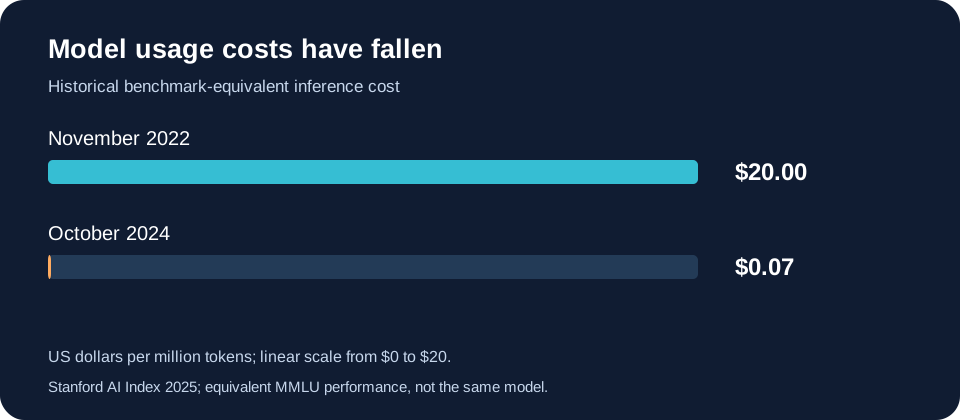
Read the chart values
| Measure | Value |
|---|---|
| November 2022 | $20.00 |
| October 2024 | $0.07 |
That distinction matters. A tool's monthly price is only one part of the bill. Setup takes time. Someone checks access permissions. Someone teaches the team. Someone deals with a changed field, a failed connection or an answer that sounds right but is wrong.
Make an inventory before opening your wallet
List the tools your business already pays for and the job each one performs. Include forms, spreadsheets, email, storage, messaging and your CRM. Ask the team which features they actually use. You may find that an existing product can handle a basic step without another purchase.
In Outrise's candidate workflow, Google Forms collects responses, Google Sheets holds the records and Apps Script helps remove repeated entries and route selected statuses. People still call or message candidates and make qualification decisions. The core value comes from connecting the steps; it does not require AI to decide whether every person should proceed.
Pay for a missing capability
When a real gap remains, describe it in plain language. For example, “We need draft replies from an approved knowledge base, with a person checking each reply.” That is a much better buying brief than “We need AI customer service.”
- Frequency: how often will someone use this feature?
- Quality: can you recognise and correct a bad result?
- Access: who can view, edit or export business information?
- Continuity: what happens if you cancel the service?
- Ownership: who keeps the workflow working after setup?
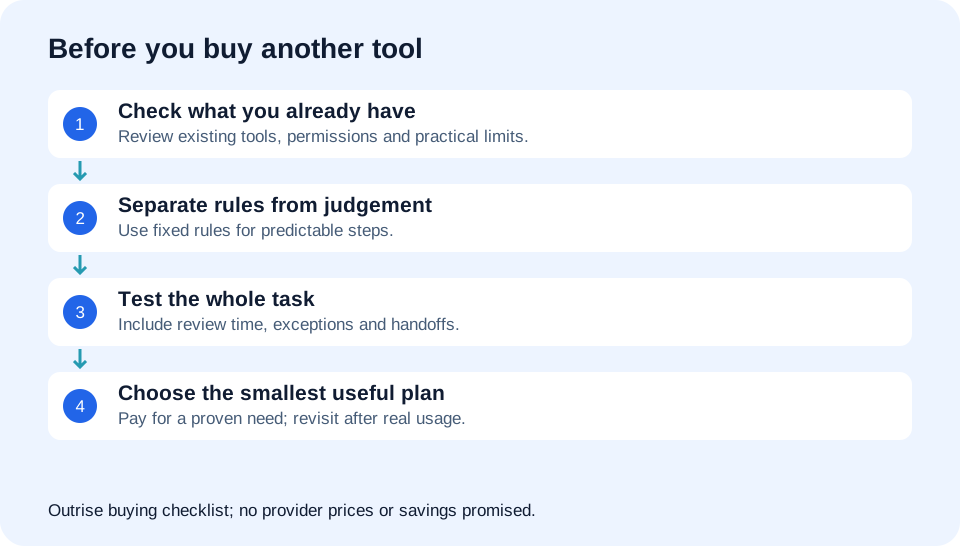
Read the workflow steps
- Check what you already have: Review existing tools, permissions and practical limits.
- Separate rules from judgement: Use fixed rules for predictable steps.
- Test the whole task: Include review time, exceptions and handoffs.
- Choose the smallest useful plan: Pay for a proven need; revisit after real usage.
Count the cost you can actually observe
For a short trial, keep a simple log: licence fees, usage charges, setup hours, review hours and correction hours. Compare the complete process with your starting point. Include work moved to another person; otherwise a saving in one place can hide a new burden elsewhere.
Do not assume a free plan is suitable for confidential customer information. Review the provider's current settings and terms before uploading real records. Begin a test with fictional or appropriately anonymised examples when possible.
Upgrade when a limit matters. If the team reliably uses a feature and the current plan blocks an agreed need, a paid tier can make sense. If a tool has no clear owner or regular use, pausing it may be the better decision.
ILLUSTRATIVE DISCUSSION
A question you might be asking.
These are example exchanges prepared by Outrise, not comments from visitors.
Could connecting our existing forms and spreadsheets be enough for the first project?
It could. First separate predictable rules from tasks needing interpretation. The missing capability should guide a purchase, rather than the other way around.
JOIN THE CONVERSATION
What does this look like in your business?
Share a practical question or experience. Comments are reviewed before they appear.